

A professional resume is essential for all dancers. It gives Directors a quick snapshot of your background and experience. It is your first opportunity to make a good impression, often before you even step foot in the studio.
I released a podcast episode on Dance Resumes Dos and Don’ts so you can find out exactly what Directors want to see. (I also have an entire Audition Guide that breaks it down, including five editable templates!).
Your resume should all fit onto one page, and sometimes it can be hard to discern what to keep and what to leave off. So let’s talk about it!
What NOT to include on your dance resume:
1. An Objective Statement
An objective statement is not necessary for a dance resume - if you’re auditioning it’s understood that your objective is to get a job as a professional dancer, attend a summer intensive, or get into a college dance program.
Caveat: I have seen some schools request this. For instance, USC Glorya Kaufman School of Dance asks all applicants to follow this template, which includes an objective statement. However, unless it is explicitly asked for, I would leave it off. It takes up a lot of space that could be better used to share other information.
2. Weight
While it is still standard practice to include height, weight is an outdated metric you do not need to automatically include and I would leave this off unless it is being explicitly asked for.
If a school/company IS explicitly requesting you to include weight, this could be a major red flag and indicator of the company culture. Use discretion and do some extra research to get more insight into what their practices and expectations are.
3. References
You should have 3-4 references on hand to produce if asked. These would be leaders in the dance world who you have worked with closely and can speak highly of your character. You always want to make sure that you have gotten permission to use someone as a reference, so reaching out early for both references and letters of recommendation is a good idea.
However, you do not need to include these on your one-page resume.
The dance world is small and any instructor, director choreographer, or mutual connection listed on your resume will likely be called upon whether or not they are an “official” reference.
4. Training/instructors who were not formative to your education
Rule of thumb: If I were to call up someone you've worked with they should know who you are and be able to give me information about your work ethic.
With this in mind, avoid including people such as:
Your first creative movement teacher (unless they also went on to train you in later years)
The famous dancer you took class from in a giant convention ballroom one time
It may look impressive to name the famous educator or dancer you took a master class from, but if it was just a one off occurrence, it’s not truly a helpful indicator of your training or background.
5. Extras just to fill the page
Don't be afraid of white space! All information needs to be relevant - avoid adding things just for fluff.
To ensure you are including only the most important information, ask yourself:
Is my resume specifically relevant to the company I am auditioning for?
Will it make sense to someone who doesn’t already know me personally?
Does it give the Director reason to believe I would be a good fit for their company?
These are all important questions to ask yourself when trying to decide which information to include and which to leave out.
Remember that the resume you send out will vary slightly for each company you audition for. Use these questions to decide what to tweak in different circumstances.
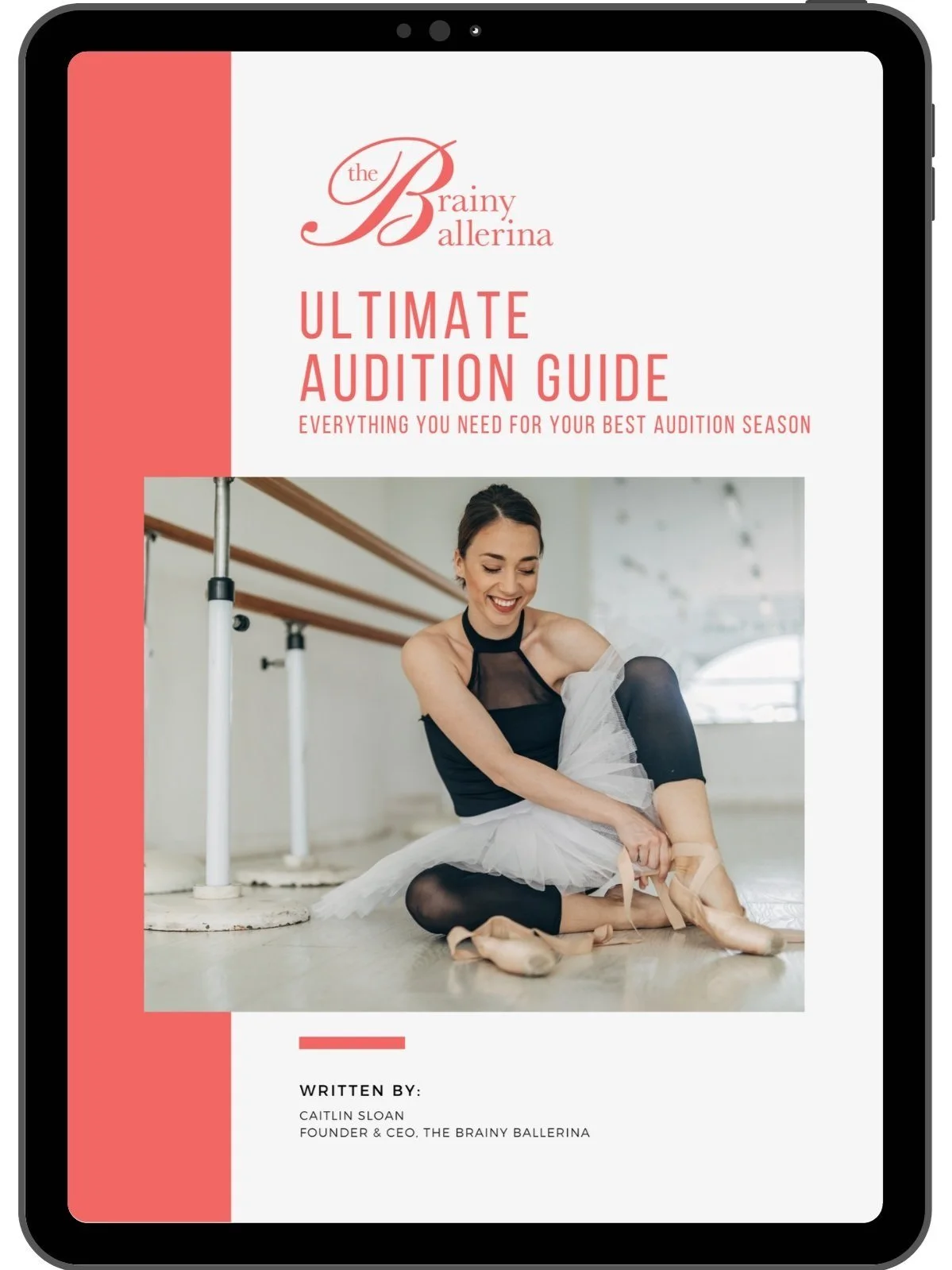
As dancers, we spend hundreds of hours honing our technique and artistry. But when it comes to figuring out how to put together a resume or what to expect in a professional audition, we’re often left to figure it out ourselves.
That’s why I put together the Ultimate Audition Guide.
This is your one-stop shop for EVERYTHING you need to tackle professional company auditions with ease. No more spending hours googling and trying to piece together a somewhat coherent audition package. With this guide, you’ll be ready to conquer audition season like a true professional.

Meet the Author
Caitlin Sloan is a Dance Educator and Career Mentor based in Madison, WI.
Caitlin received her Bachelor of Arts in Dance from Grand Valley State University and Graduate Certificate in Nonprofit Management from the University of Missouri.
She danced professionally for nine years with companies including Ballet Tucson and Missouri Contemporary Ballet (now Mareck Dance). Caitlin has taught at schools all over the Midwest, most notably serving as Director of The School of Missouri Contemporary Ballet and Youth Company Director for Central Indiana Dance Ensemble. She is currently on faculty at the School of Madison Ballet.
Caitlin founded The Brainy Ballerina® in 2019, a virtual resource providing support and guidance for aspiring ballet dancers. Follow @thebrainyballerina on Instagram for your daily dose of dance career guidance and inspiration.
